
© Green Green, 2022-2026
Website developed by Anton Vlasov
Disposable paper cups are often perceived as an eco-friendly alternative to plastic ones, but in reality they are not fully paper-based. Almost always, they have a thin layer of plastic or PLA inside that prevents leakage. Because of this, such cups are difficult to recycle: paper and plastic are hard to separate, so they end up in landfills rather than being recycled.
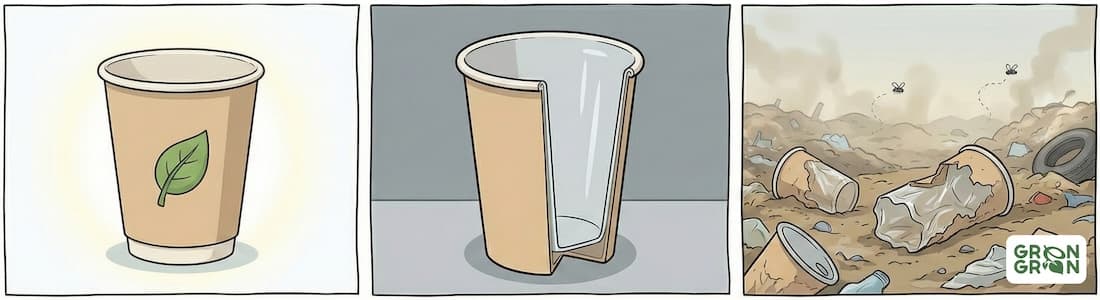
The production of such cups and tableware also remains resource-intensive: wood, water, and energy are used, and in the end, a composite waste is produced that cannot be recycled in Armenia. At the same time, they are used for just a few minutes, but decompose for years. From an environmental perspective, this is one of the most inefficient formats of disposable packaging.
For businesses, a more honest and realistic solution today is PP cups (polypropylene, marking 5). This is regular recyclable plastic that is not a composite and does not contaminate recyclable material streams, unlike paper and PLA cups. The best practice is to combine PP cups with incentives for reusable mugs — discounts or bonuses for customers. This approach actually reduces waste, rather than creating an illusion of "eco-friendliness".